
Airless is a dispensing system, not a promise that every formula will stay fresh or pump cleanly. A buyer still has to match the product path, piston, output, fill method and decoration to the real formula.
An airless bottle uses a pump and a moving bottom piston instead of a conventional dip tube. Choose one only after checking formula flow, pump output, piston movement, fill method, capacity and materials as a complete system. Ruijiong's current Airless Bottle category lists 15, 30, 50, 80 and 100 ml formats with PETG, AS or acrylic bodies and PP pistons and pump heads. Its multi-spec range extends beyond those core sizes. Final approval should follow the selected SKU drawing and compatibility test.
How an airless bottle moves the product
When the user presses the actuator, the pump removes a dose from the product chamber. The pressure difference below the product moves the piston upward. The piston follows the remaining formula, so the system does not need a dip tube reaching into the bottle.
This mechanism can reduce the amount of air exchanged with the product during normal dispensing, but the word airless does not prove zero oxygen exposure, sterility or a longer shelf life. Filling, pump design, seal integrity, formula chemistry and the number of openings before use still matter.
Statements such as "prevents oxidation" or "extends shelf life" need product-specific stability evidence. Use the airless mechanism as a reason to test the package, not as a substitute for the brand's stability and compatibility program.
Read the catalog as a shortlist
Ruijiong publishes the following category-level specifications. They help a buyer define the starting range, but they do not show the dimensions, output or material stack for every individual model.
| Field | Current site listing | Approval question |
|---|---|---|
| Core capacities | 15, 30, 50, 80 and 100 ml | What is the actual fill volume and headspace for the selected model? |
| Expanded range | 5-150 ml on the Multi-Spec page | Which capacities share the same design and material stack? |
| Pump interface | 20, 24 and 28 mm listed on the category page | Is this an integrated package or a model-specific pump interface? |
| Materials | PETG, AS or acrylic body; PP piston and pump head | Which resin touches the formula, and what colorants or seals are present? |
| Formats | Integrated bottle and replaceable liner | How is the liner installed, removed and sealed? |
| Finishes | Transparent, frosted, colored, plated and UV coated | Which process and adhesion method apply to the approved sample? |
The main category lists 15-100 ml, while the Multi-Spec Airless Bottle page lists 5-150 ml. This can reflect different product families. Put the exact model number and drawing revision on the sample approval.
Match the piston and pump to the formula
Viscosity is only the start. A formula can change during cooling, carry air after filling or contain particles that disturb a small flow path. Oils, solvents and fragrance systems can also affect plastics, seals, colorants or coatings. The supplier needs enough information to choose a model worth testing.
| Formula detail | What can happen | What to test |
|---|---|---|
| High viscosity | Slow priming, delayed recovery or uneven piston travel | Full-stroke output and piston movement after storage |
| Low viscosity | Leak paths become easier to expose | Seals, valve behavior and orientation testing |
| Particles or shimmer | Flow path or valve may restrict | Particle size, settling and repeated actuation |
| Air introduced during filling | Interrupted output or excess priming | Filling method, deaeration and initial strokes |
| Formula-sensitive decoration | Coating or print may soften, stain or lift | Contact zones and decorated-pack storage |
A representative formula is better than a generic test liquid. If the product is still being developed, document the allowed range of viscosity, oil phase, pH and suspended material, then retest when the final formula is locked.
Filling and priming are part of package selection
An airless bottle can fail even when the components are dimensionally correct. The filler has to load the product without trapping excessive air, close the package correctly and deliver a piston position that allows normal priming.
- Confirm whether the selected package is bottom-filled or top-filled and how the piston is positioned.
- Share the filling temperature because it can change viscosity and product volume.
- Record fill weight, headspace and closing method on the pilot run.
- Count strokes to the first full dose, then measure output across repeated strokes.
- Watch the piston through the full use cycle for tilt, sticking or uneven travel.
- Repeat the test after the storage and transport conditions used by the brand.
Tell the packaging supplier who will fill the product and what equipment that filler uses. A package sample approved by hand can still require a different fixture, closing method or line setting in production.
Choose integrated, refillable and decorated formats deliberately
The Ruijiong category page lists both an integrated airless bottle and a replaceable liner format. An integrated system can simplify component selection. A replaceable liner adds a user interaction and more interfaces to test, but it may support a refill concept when the full package is designed for it.
| Choice | Useful when | Questions before approval |
|---|---|---|
| Integrated bottle | The brand wants one assembled dispensing package | Filling route, piston installation, component replacement and recycling path |
| Replaceable liner | The outer pack is intended to accept a matched refill | Liner retention, user steps, seal repeatability and refill availability |
| Transparent or frosted | The formula or piston position may be visible | Light exposure, visual defects and batch color tolerance |
| Plated or UV coated | The pack needs a metallic or coated finish | Adhesion, abrasion, formula contact and recycling expectations |
| Multi-color family | Color is used to distinguish products or variants | Approved color standard and consistency across capacities |
Airless bottle or separate cream pump?
A separate cream pump can suit a brand that already has a compatible bottle and wants a dip-tube system. An airless bottle combines the piston chamber and pump as a package. A conventional lotion pump may be more appropriate for larger doses or common daily-care bottles. Compare the complete pack, not the pump head alone.
Turn quality claims into a test record
Ruijiong's current airless category page says the factory checks vacuum sealing, compression and piston sliding. It also publishes a piston gap below 0.03 mm and residue below 1 percent as product claims. Before using either number in a specification, ask for the exact model, method, sample size, formula or test medium, and pass criteria.
| Inspection | Evidence to request | Buyer decision |
|---|---|---|
| Vacuum integrity | Method, duration, orientation, sample size and failure definition | Does the assembled pack hold the required condition? |
| Piston sliding | Formula or test medium, travel observation and jam criteria | Does the piston follow the product without tilt or sticking? |
| Output consistency | Individual stroke results after priming | Does the dose stay within the brand's tolerance? |
| Residual product | Starting fill, ending mass, actuation method and calculation | Is the result relevant to the real formula and use pattern? |
| Transport leakage | Pack orientation, pressure or vibration method and inspection points | Can the finished package meet the brand's route conditions? |
| Decoration | Color approval, adhesion and abrasion result | Will the approved appearance survive filling and distribution? |
What to send the airless bottle factory
A useful RFQ allows the factory to select a model for testing without inventing the missing conditions.
- Formula: sample, product type, viscosity at filling and use temperatures, oils, particles and sensitive ingredients.
- Fill: target fill volume, filling method, filling temperature, filler name and pilot-run timing.
- Dispensing: target output per stroke, expected dose per use and acceptable priming behavior.
- Pack: capacity, shape, integrated or replaceable-liner format, and any dimensional limit.
- Materials: required product-contact materials and any market-specific material restriction.
- Decoration: color reference, transparency, coating, plating, logo method and approved visual standard.
- Validation: compatibility, stability, transport and use-cycle conditions with pass criteria.
- Commercial context: forecast, launch date and destination market. Confirm MOQ and lead time for the exact configuration.
Ruijiong's live company profile states that the factory was established in 2018 and lists 10 Haitian injection molding machines, three automatic pump-core testing machines and four automated assembly units. These company-published details explain why the RFQ should ask for model-specific molding, assembly and inspection records rather than a generic quality statement.
Current Ruijiong airless bottle styles
These images and links come from Ruijiong's live catalog. Use them to choose a visual direction, then request the drawing and material list for the exact capacity.
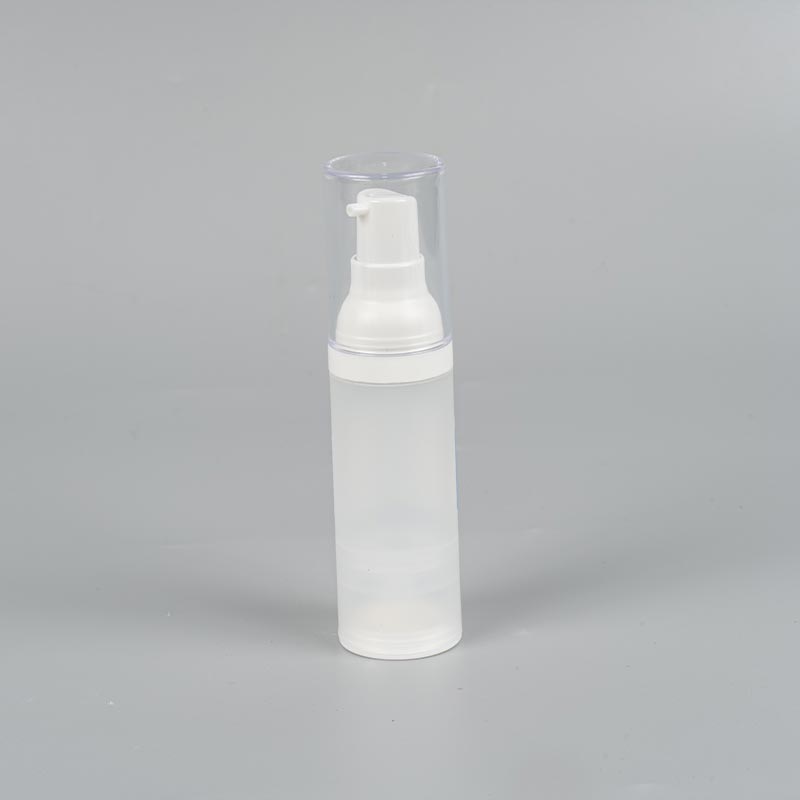
Round airless bottle
A starting format for brands that want a conventional cylindrical package.
View the current model page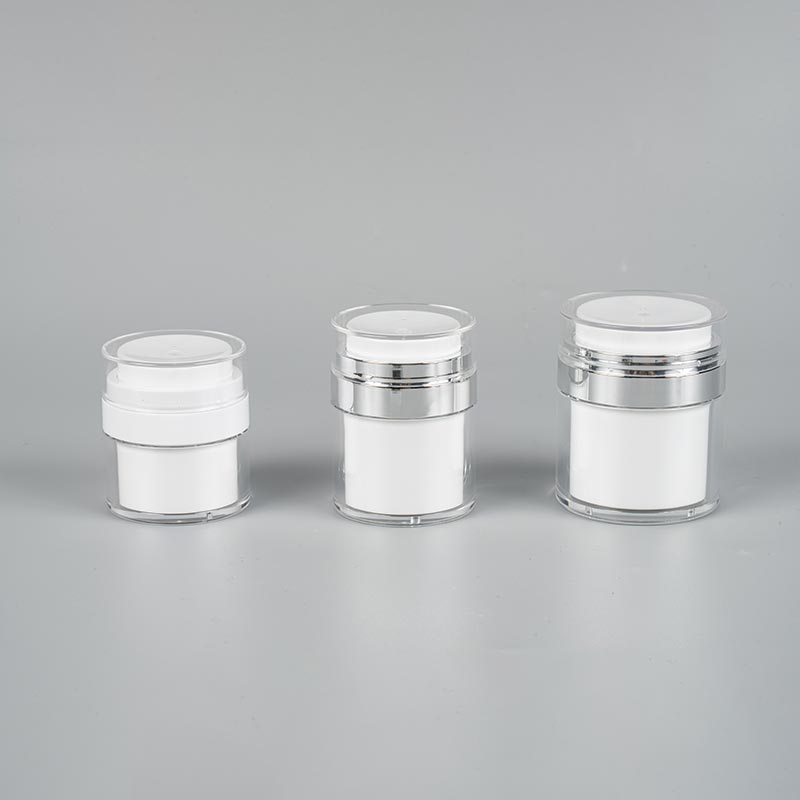
Plated airless bottle
Treat the decorative finish and the dispensing system as separate approval items.
View the current model page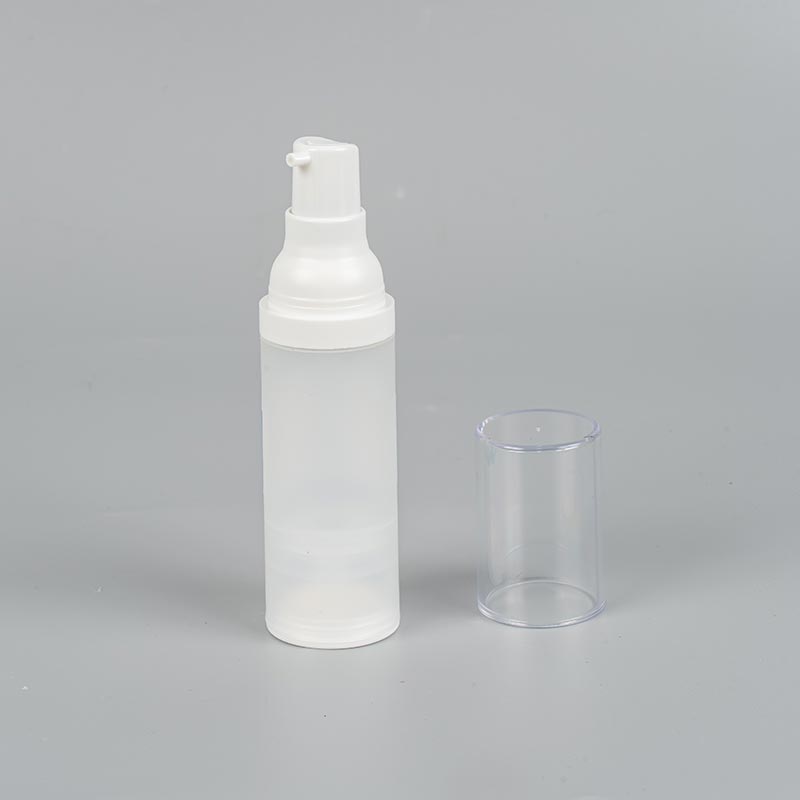
Multi-color range
Useful for a product family when the approved color can be repeated across sizes.
View the current model page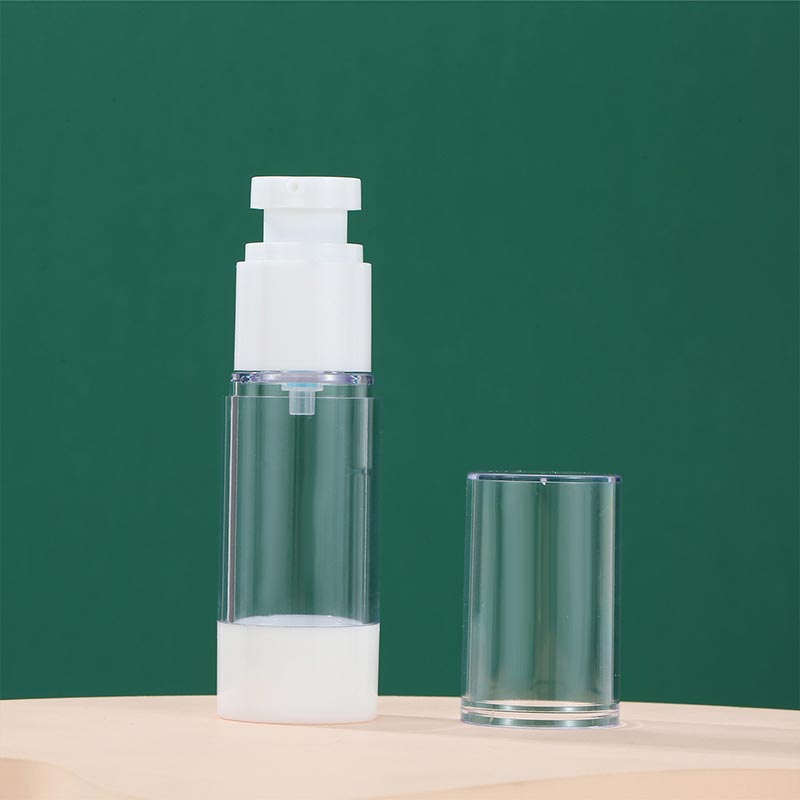
Multi-spec range
The live page lists capacities from 5 to 150 ml. Confirm which sizes share the same construction.
View the current model pageAirless bottle FAQ
How does an airless bottle dispense without a dip tube?
The pump removes product from the chamber and the pressure difference moves the bottom piston upward. The piston follows the product as it is dispensed, so a conventional dip tube is not required.
Can every cream or serum use the same airless bottle?
No. Formula viscosity, particles, oils, filling temperature and the selected pump path can change priming, output and piston movement. Test the complete package with the real formula or a representative production formula.
What airless bottle capacities does Ruijiong currently list?
Ruijiong's main Airless Bottle category page lists 15, 30, 50, 80 and 100 ml. Its Multi-Spec Airless Bottle page lists an expanded range from 5 to 150 ml. Confirm the capacity, dimensions and material from the chosen SKU drawing.
What should I send when requesting an airless bottle sample?
Send the formula or a representative sample, viscosity at the relevant temperature, fill volume, filling method, target output, required capacity, decoration brief and the storage and transport conditions used for approval.