
A pump that looks right can still fail on the filling line or in the customer's hand. Start with the formula, target dose and bottle finish. The finish and decoration come after the dispensing system works.
Choose a cream pump in this order: confirm the formula state and viscosity, set a target output per stroke, match the complete neck finish, cut the dip tube to the real bottle, then test the assembled package under the brand's storage and transport conditions. Ruijiong's current cream pump catalog lists outputs of 0.25-0.5 ml and common sizes of 18/410, 20/410 and 24/410. These are catalog references, not approval limits for every formula or bottle.
Start with what the pump must dispense
"Cream pump" is a buying term, not a complete technical specification. A light serum, an emulsion, a dense eye cream and a free-flowing powder do not place the same demands on the pump. If a request contains only a product name and bottle capacity, the supplier still has to guess.
Send a formula sample when possible. If the final formula is not ready, send a representative base and state what may change before production. Fragrance, oils, suspended particles and a late viscosity adjustment can all change how the package behaves. A pump approved with water is only approved with water.
Ruijiong's current catalog uses the cream pump name across several pump styles, while individual model pages describe different media. Your RFQ should say liquid cream, gel, lotion or powder and identify the exact SKU being evaluated. This keeps a catalog label from becoming the purchasing specification.
When another dispenser may fit better
A low-viscosity hand wash or body lotion may suit a higher-output lotion pump. A water-thin formula designed to foam needs a foam pump and a compatible foamer bottle. A package that must operate without a dip tube may be better evaluated as an airless bottle system. The formula and use pattern should decide the category.
Choose output by dose, not by habit
Ruijiong's current category page lists 0.25-0.5 ml per actuation for its cream pump range. The smaller output can suit local application or concentrated products. The larger output reduces the number of strokes when the user needs more product. Neither option is automatically better.
| Decision | Lower output | Higher output | What to verify |
|---|---|---|---|
| Typical use pattern | Small-area or measured application | Larger-area application | Target dose from the brand's use instructions |
| User action | More control per stroke | Fewer strokes for the same dose | Prime count and full-stroke consistency |
| Formula challenge | Small flow path may be less forgiving | Larger dose may change head geometry | Actual formula, not water |
| Package economics | More theoretical doses per fill | Fewer theoretical doses per fill | Declared net content and intended usage |
For a simple planning calculation, a 30 ml fill divided by 0.25 ml gives 120 theoretical full strokes. At 0.5 ml, it gives 60. Real usable strokes will differ because priming, incomplete strokes, formula behavior and package residue affect the result. Use the calculation to choose a test target, not as a guaranteed consumer claim.
Match the full bottle system
The closure code must match the actual bottle finish. Ruijiong currently lists 18/410, 20/410 and 24/410, plus glass, acrylic, PETG and thick-wall PP bottles in the 15-50 ml range. The bottle volume alone does not confirm fit.
- Send the bottle drawing with the complete neck finish, sealing surface and thread dimensions.
- Confirm whether the seal is created by a gasket, plug seal or another interface on the selected model.
- Specify the dip-tube material and cut length. Check the bottom angle and clearance in the real bottle.
- Test the pump on decorated production bottles. Coating or dimensional variation around the neck can change assembly behavior.
- Check the finished pack upright, inverted and after the transport simulation used by your brand.
Ask the supplier to name the bottle and pump drawing revisions on the approved sample. "Fits our 30 ml bottle" is not enough when the same capacity can be made with different neck finishes.
Compare the parts that affect use
The current Ruijiong range includes internal-spring, external-spring, aluminum-finish and multi-spec models. These names describe construction or appearance, but they do not replace a compatibility test.
| Feature | Why a buyer asks | Factory confirmation needed |
|---|---|---|
| Internal or external spring | Changes the pump architecture and possible product-contact path | Exploded drawing and wetted-parts list |
| Rotational lock or dust cover | Affects accidental actuation, cap use and shelf presentation | Lock direction, torque and transport test |
| PP pump body and PE dip tube | Provides a starting material list | Full resin grades, colorants, seals and formula compatibility |
| Aluminum or plated finish | Changes appearance and decoration process | Finish sample, adhesion test and recycling expectations |
| Custom color | Connects the pump to the brand system | Approved color standard and viewing conditions |
Approve the assembled package, not loose components
A loose pump can look fine and still fail after filling. The formula, bottle, pump, dip tube, decoration and assembly torque work as one system. Build the test around the conditions the finished product will face.
| Test area | Record | Reason for failure |
|---|---|---|
| Priming | Strokes to first full dose and any air pockets | Long tube, high viscosity, poor seal or incomplete filling |
| Output | Mass or volume across repeated full strokes | Formula variation, partial actuation or pump inconsistency |
| Recovery | Head return and delay between strokes | Viscosity, spring choice or blocked flow path |
| Leakage | Neck, actuator and lock condition in each orientation | Finish mismatch, sealing damage or assembly torque |
| Dip-tube reach | Tube position and product access near the base | Incorrect cut length or bottle geometry |
| Appearance | Color, coating and surface after storage | Formula contact, abrasion or decoration incompatibility |
Use the brand's own temperature, duration and transport requirements. Do not borrow an arbitrary test condition from another product and present it as proof for this package.
What a factory needs in the RFQ
From a factory perspective, the fastest RFQs are not the longest. They remove the decisions that otherwise have to be guessed.
- Formula: product type, viscosity at the relevant temperature, oils, particles and any ingredient of concern.
- Dose: desired output per full stroke and the intended amount per use.
- Bottle: drawing, neck finish, material, capacity and the physical bottle if available.
- Assembly: dip-tube length, closure torque requirement, lock direction and overcap requirement.
- Decoration: color reference, surface finish, logo method and approved visual sample.
- Validation: storage, transport and compatibility conditions plus acceptance criteria.
- Commercial context: forecast, launch date and destination market. Ask for the model-specific MOQ and lead time rather than assuming one site-wide number.
Ruijiong's current company profile states that the factory was established in 2018 and lists 10 Haitian injection molding machines, three automatic pump-core testing machines and four automated assembly units. These are company-published capabilities. A project approval should still identify the test method, sample size and acceptance criteria used for the selected pump.
Current Ruijiong cream pump catalog
The images below are live assets from Ruijiong's website. Use them to shortlist a structure or finish, then confirm the intended medium and exact drawing before sampling.
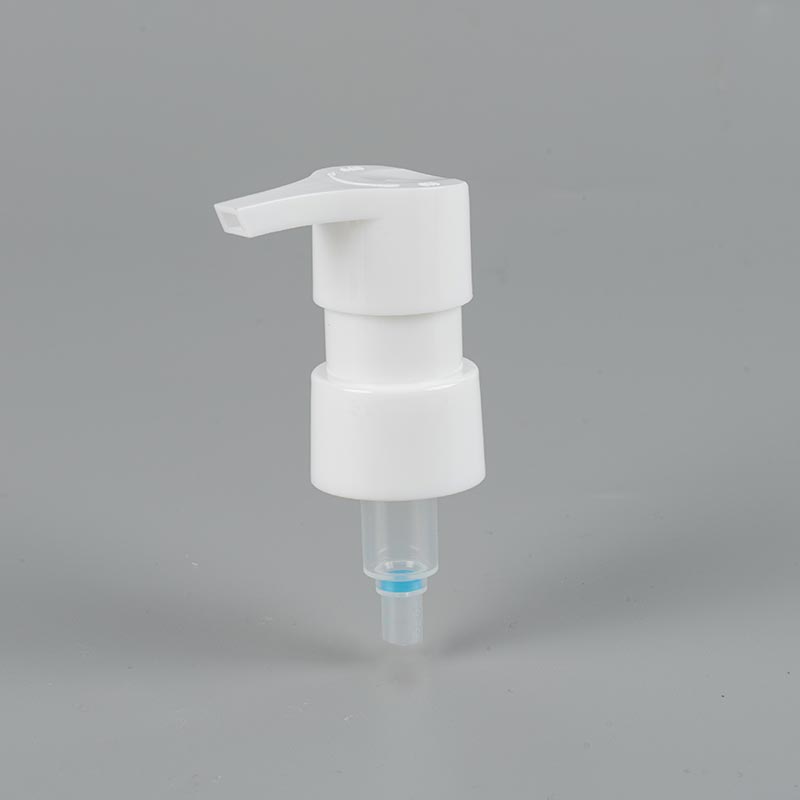
External spring model
Use the detail page to identify the exact model. Confirm whether it is intended for a liquid formula or powder.
View the current model page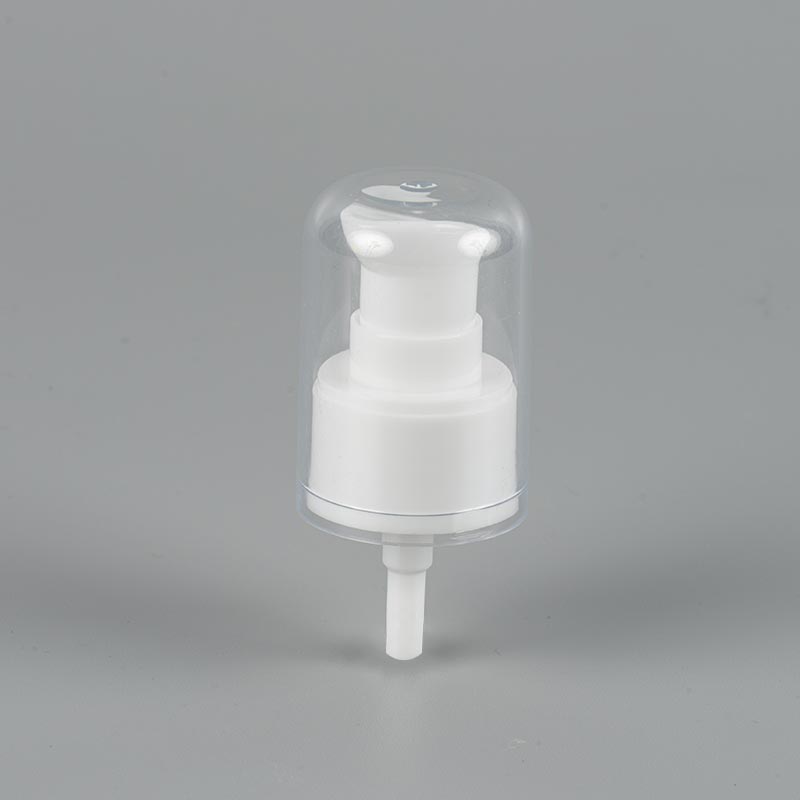
Internal spring model
Request the wetted-parts list, output and selected neck finish with the sample.
View the current model page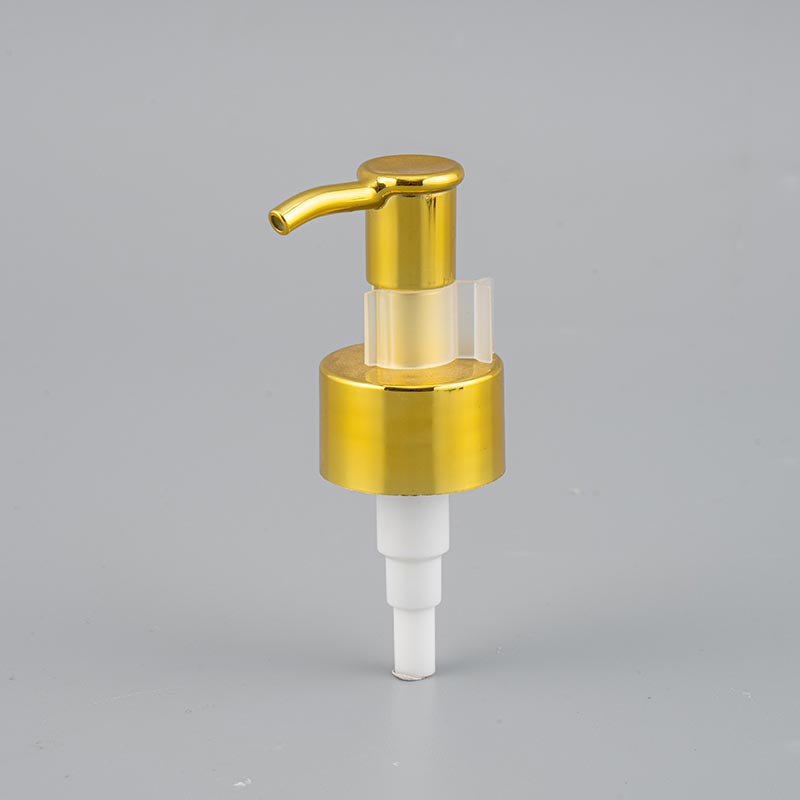
Aluminum finish model
Evaluate the dispensing core and the decorative shell as separate approval items.
View the current model page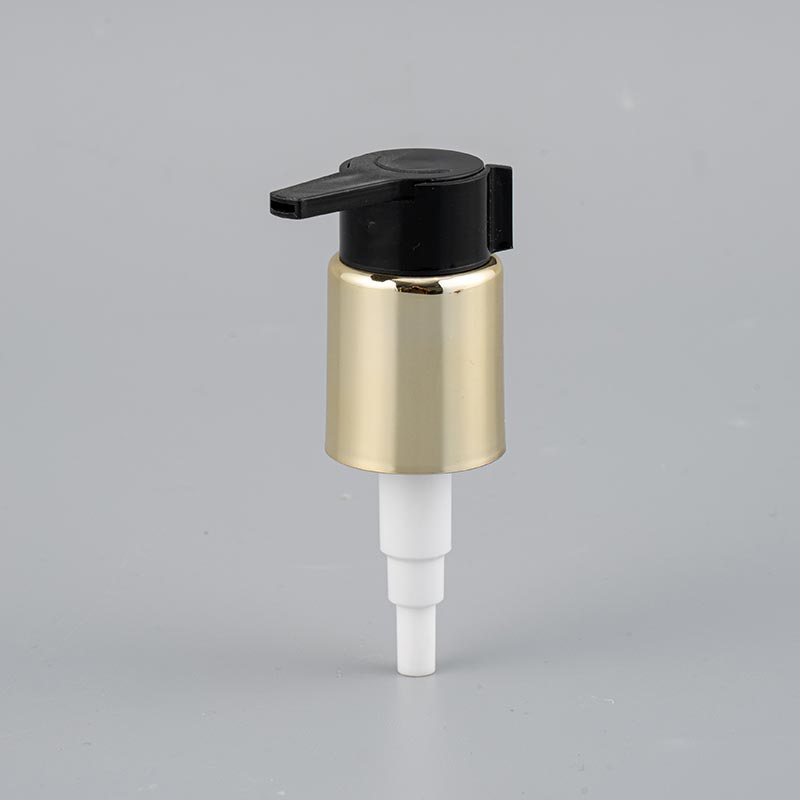
Multi-spec range
Shortlist by output, neck finish and formula rather than choosing from appearance alone.
View the current model pageCream pump FAQ
What information does a cream pump supplier need for a recommendation?
Send the formula type, viscosity at the intended filling or test temperature, bottle drawing, exact neck finish, target output per stroke, dip-tube length, decoration requirements and the conditions used for compatibility testing.
Can I select a cream pump from the bottle capacity alone?
No. Bottle capacity does not confirm the neck finish, dip-tube length, required output or whether the pump can handle the formula. The bottle drawing and formula data are more useful than capacity alone.
What cream pump sizes does Ruijiong currently list?
Ruijiong's current cream pump category page lists 18/410, 20/410 and 24/410 as common sizes. The selected pump still needs to be checked against the actual bottle finish and SKU drawing.
Should I use a cream pump or an airless bottle?
Choose a separate cream pump when you already have a compatible bottle and want a conventional dip-tube system. Consider an airless bottle when the package needs an integrated piston system without a dip tube. Test both options with the real formula before approval.