
Quick Answer
A fine mist sprayer is a small pump that atomises liquid into a fine, uniform mist as you press the actuator. The same mechanism is often sold as a “mist spray pump.” Fine mist formats are chosen when a product needs light, even coverage and controlled output — facial toners and mists, hair and body sprays, sanitisers, and oral and nasal care. When sourcing one, the details that matter are the atomisation quality, the metered output per press, the neck finish and dip-tube length, and material compatibility with your formula.
What Is a Fine Mist Sprayer?
A fine mist sprayer is a spring-loaded pump fitted to the neck of a bottle. Pressing the actuator pushes liquid up a dip tube and forces it through a small nozzle orifice, which breaks the stream into a cloud of very fine droplets. The result is even, low-splash coverage rather than a heavy stream or a single drip.
Because the pump and the mist it produces are the defining features, buyers and suppliers use several names for the same part: fine mist sprayer, mist spray pump, or simply “mist pump.” They all describe a closure that atomises liquid on actuation. What separates a good one from a poor one is consistency — a fine mist sprayer should deliver the same droplet pattern and the same dose on the first press and the ten-thousandth.
At Ruijiong, mist sprayers sit within our wider mist sprayer range, alongside nasal, oral, rocker, and trigger formats. You can see the fine-mist line specifically on our fine mist sprayer category page.
How a Fine Mist Sprayer Works
Every fine mist sprayer relies on the same simple cycle. Understanding it helps you specify the right pump and diagnose problems like weak spray or leakage.
The pressing stroke
When you press down, a piston compresses the liquid already held in the pump chamber. A one-way valve at the top opens, and the pressurised liquid is pushed through the nozzle orifice. The orifice geometry and the swirl chamber behind it break the liquid into fine droplets — the finer and more uniform the atomisation, the “softer” the mist feels.
The return stroke
As you release, the internal spring pushes the piston back up. This creates a partial vacuum in the chamber, the lower valve opens, and fresh liquid is drawn up the dip tube from the bottle to refill the chamber, ready for the next press. A well-made pump keeps this refill quick and complete, so every actuation gives a full, consistent dose.
Output note: Fine mist pumps deliver a metered dose per press. Exact output depends on the pump model and nozzle — confirm the per-actuation volume for your chosen specification when you request a sample, rather than assuming a fixed figure.
The Main Types of Fine Mist Sprayers
“Fine mist sprayer” is a family, not a single product. The right type depends on the formula, the dose, and where the mist needs to go.
| Type | Best for | Notes |
|---|---|---|
| Cosmetic / personal-care fine mist | Toners, facial & body mists, hair sprays, fragrances | Prioritises soft, even atomisation and a clean cut-off with no dripping |
| Nasal mist sprayer | Nasal medications, saline, care solutions | Made from pharmaceutical-grade materials with precise, controlled output |
| Oral / throat sprayer | Mouth sprays, breath fresheners, oral care liquids | Food-grade PP; longer nozzle to reach the target area |
| Trigger sprayer (fine-mist mode) | Household cleaners, disinfectants, garden liquids | Larger format for 500 ml–1 L bottles; switchable mist/stream |
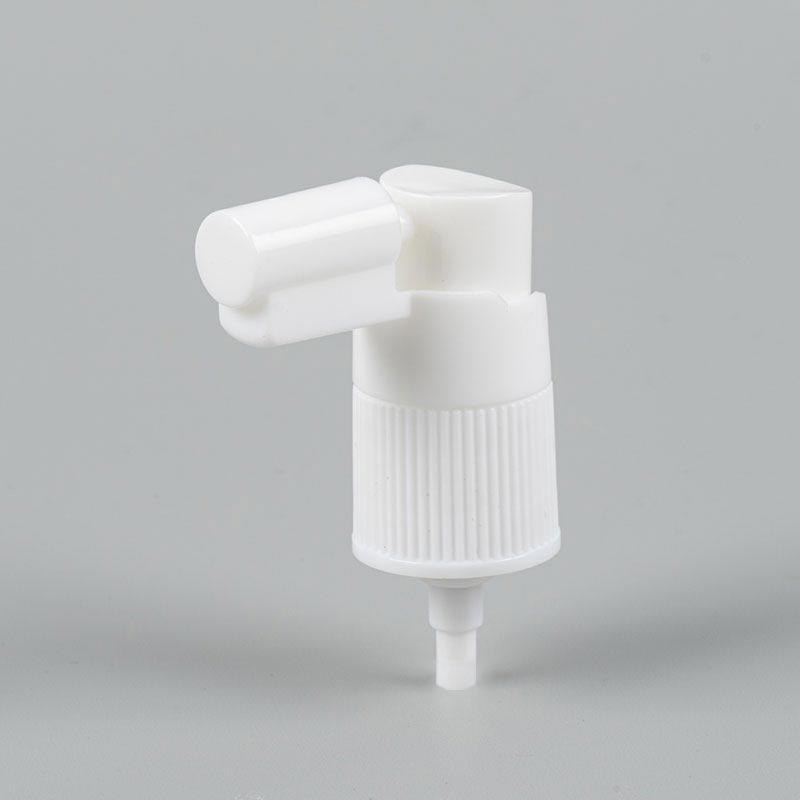
Ruijiong fine mist oral sprayer — food-grade PP, offered in 20 / 30 / 50 / 100 ml capacities with customisable atomisation.
For healthcare and oral-care formats, material safety is central. Our oral sprayer uses food-grade PP that is non-toxic, odourless, and heat-resistant, and it is offered in 20, 30, 50, and 100 ml capacities with a fine or gentle mist option. The nasal sprayer range is built from pharmaceutical-grade materials for controlled nasal dosing.
Where Fine Mist Sprayers Are Used
Fine mist formats have spread across almost every liquid-product category because they combine controlled dosing with a premium feel. Common applications include:
- Cosmetics & skincare — facial toners, setting sprays, essence mists, and hydrating mists where even coverage protects the formula and the experience.
- Personal & hair care — body sprays, hair tonics, and leave-in treatments that need light, non-dripping application.
- Healthcare — nasal and oral sprays where dose control and material safety are non-negotiable.
- Household & daily chemical — sanitisers, air and fabric fresheners, and light cleaning liquids.
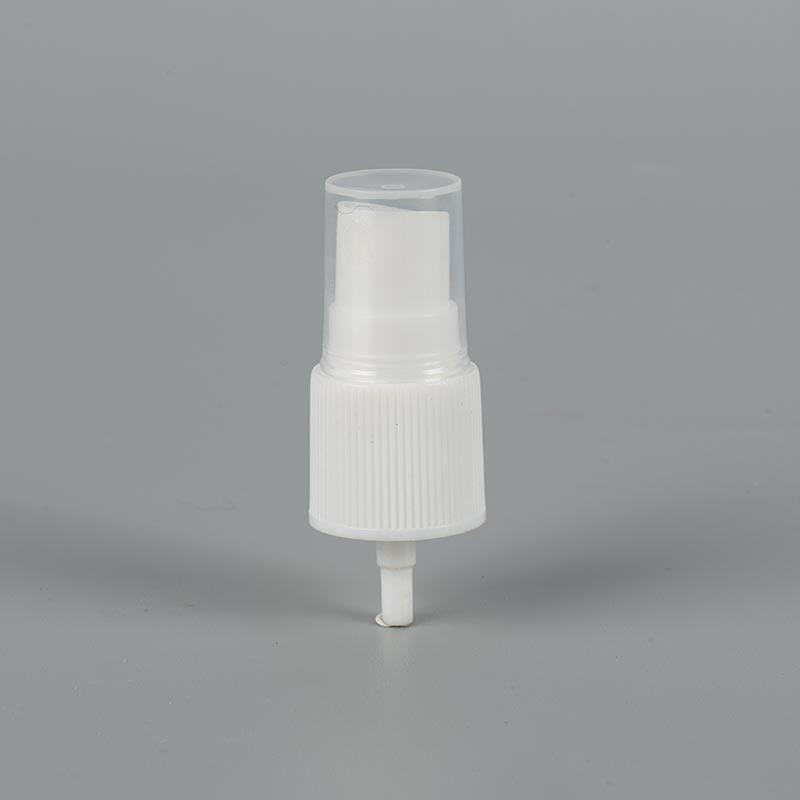
A consistent fine mist improves dose accuracy and reduces waste — a factor we cover in depth in our companion article.
For a deeper look at how mist quality affects the end-user experience, see how a fine mist sprayer improves packaging performance and user experience.
How to Choose a Fine Mist Sprayer
Whether you are sourcing a mist spray pump for a new skincare line or a household product, work through the same short checklist. Each factor changes both performance and unit cost.
1. Atomisation quality
This is what buyers feel first. Ask for a sample and spray your own formula — a good fine mist sprayer produces an even cloud with no large droplets and a clean cut-off when you release.
2. Metered output per press
Match the dose to the product. A facial mist wants a light output for even coverage; a sanitiser may need more per press. Confirm the exact per-actuation volume for the specific pump you choose.
3. Neck finish and bottle compatibility
The pump has to thread onto your bottle. Typical industry neck finishes for personal-care mist pumps include 18/415 and 20/410; larger household formats use bigger closures. Confirm the finish, closure type, and dip-tube length against your bottle before ordering.
4. Material and formula compatibility
Standard pumps are PP-based; oral and nasal formats use food- or pharmaceutical-grade materials. If your formula is alcohol-based, oily, or reactive, flag it early so the supplier can confirm the gasket and component materials will not react.
5. Durability
For frequently used products, ask about press-life testing. As a reference point, Ruijiong oral sprayers are built to withstand over ten thousand actuations in normal use, and each pump line is performance-tested before shipment.
Watch for: a mist that looks fine with water can behave differently with your actual formula. Always sample-test with the real liquid — viscosity and alcohol content change the spray pattern.
Fine Mist Sprayer vs Trigger Sprayer vs Foam Pump
Buyers often weigh a fine mist sprayer against neighbouring dispensing formats. They are not interchangeable — each suits a different job.
| Format | Output | Typical use | Bottle size |
|---|---|---|---|
| Fine mist sprayer | Soft, even micro-mist | Toners, mists, sanitisers, oral/nasal care | Small–medium |
| Trigger sprayer | Adjustable mist or direct stream | Cleaners, disinfectants, garden liquids | 500 ml–1 L |
| Foam pump | Aerated foam | Hand wash, facial cleanser | Small–medium |
In short: choose a fine mist sprayer for light, even application and controlled dosing; a trigger sprayer for larger household formats and longer reach; and a foam pump when the product performs best as foam.
Sourcing Fine Mist Sprayers from Ruijiong
Ruijiong (YUYAO Ruijiong Daily Necessities Factory) is a China-based manufacturer of sprayers and cosmetic, healthcare, and daily-chemical packaging. We have produced spray pumps and packaging since 2018, and we sell direct as a factory rather than through a trading intermediary.
What we bring to a sprayer program
- In-house production & testing — 10 Haitian injection-moulding machines, 3 automatic pump-core testing machines, and 4 automated assembly lines, so moulding, assembly, and testing run under one roof.
- OEM / ODM customisation — our technical team designs and develops moulds to your specifications; we support custom colour on larger runs, adjustable straw/dip-tube length, anodising, and tuned atomisation.
- Global export experience — our products ship to Europe, the Americas, Southeast Asia, South America, the Middle East, and beyond.
- Sampling before commitment — we provide up to 10 sample units per batch free of charge so you can verify spray quality and compatibility first.

Ruijiong's Yuyao factory runs an integrated moulding, assembly, and testing line for consistent pump quality.
Standard lead time is 15–20 days once the order and payment are confirmed, and we settle by 100% T/T. Minimum order quantity depends on the product and the level of customisation — some pump lines start from 10,000 units — so the most reliable way to get an accurate MOQ and quote is to send your specification and target quantity. Drawings or a reference sample help us respond precisely.
Frequently Asked Questions
What is a fine mist sprayer used for?
A fine mist sprayer atomises liquid into a soft, even mist and is used wherever light, controlled application matters — facial toners and mists, hair and body sprays, sanitisers, and oral and nasal care products.
How is a fine mist sprayer different from a trigger sprayer?
A fine mist sprayer produces a soft micro-mist and suits small to medium bottles for personal care and light liquids. A trigger sprayer is a larger format for 500 ml to 1 L bottles, with an adjustable mist or direct stream, and is aimed at household cleaners and similar products.
What materials are fine mist sprayers made from?
Most fine mist sprayers are PP-based. Oral formats use food-grade PP, and nasal formats use pharmaceutical-grade materials. If your formula is alcohol-based or reactive, confirm component and gasket compatibility with the supplier before ordering.
Can I get samples before placing an order?
Yes. Ruijiong provides up to 10 sample units per batch free of charge so you can test spray quality, atomisation, and compatibility with your product before committing to a bulk order.
What is the lead time for a fine mist sprayer order?
Standard production lead time is 15 to 20 days once the order and payment are confirmed. We monitor production throughout to keep shipment on schedule.
What is the minimum order quantity?
The minimum order quantity depends on the product and the level of customisation; some pump lines start from 10,000 units. Send your chosen specification and target quantity for an exact MOQ and quote.
Do you offer customisation and OEM service?
Yes. As a factory with in-house mould design, Ruijiong supports OEM and ODM work, including custom colour on larger runs, adjustable straw/dip-tube length, anodising, and tuned atomisation effects.
What payment methods do you accept?
Ruijiong settles orders by 100% Telegraphic Transfer (T/T), a standard and secure method for international trade.